
Buying or selling a Connecticut home should mark an exciting transition, not a stressful standoff over paperwork. Yet title issues continue to disrupt transactions at the worst possible moment, leaving buyers and sellers scrambling to salvage their closing dates while legal complications mount.
At Mandelbaum Barrett PC, our residential real estate attorneys understand how devastating these delays can be for Connecticut homeowners and buyers. With extensive experience resolving title defects across Greenwich, Fairfield County, and the entire state, we guide clients through complex title challenges that threaten to derail closings.
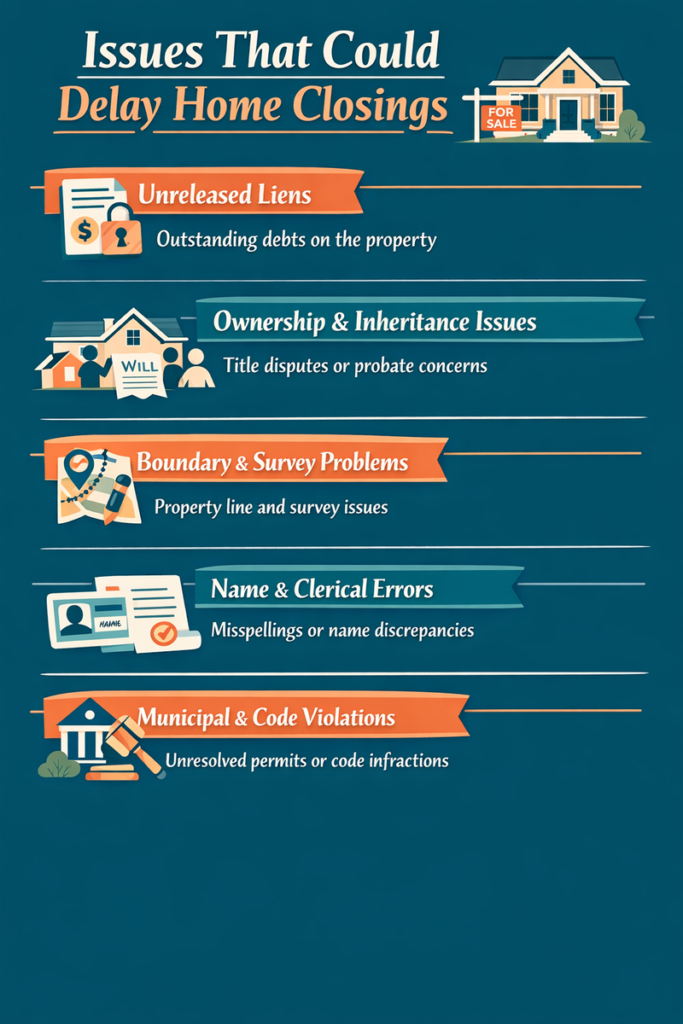
5 Title Issues That Could Delay Home Closings and What to Do to Address Them
Understanding the specific problems that can emerge during title searches helps buyers and sellers prepare for potential obstacles. The following issues are some of the most common title issues that delay Connecticut residential real estate closings:
Unreleased Liens
One of the most frequent title problems involves liens that should have been released but remain on record. Previous owners may have paid off mortgages, settled tax debts, or resolved mechanic’s liens years ago, yet the official discharge never made it into the land records. Connecticut’s decentralized recording system means each town clerk maintains separate records, and administrative oversights can leave these outdated burdens attached to your property indefinitely.
According to the National Association of Realtors, approximately 11 percent of delayed closings stem from title and deed complications, such as unreleased liens. When your title search reveals an unreleased lien, immediate action becomes essential. Our attorneys contact the lienholder directly to obtain a proper discharge document. For mortgages, this typically involves requesting a satisfaction piece from the original lender. If the original lienholder cannot be located, we may need to file a quiet title proceeding to remove the cloud on title.
Ownership Disputes and Inheritance Issues
Gaps in the chain of title can arise when property transfers aren’t properly documented or when estates aren’t fully probated. Perhaps a previous owner died without a will, leaving multiple heirs with potential claims. Maybe a divorced spouse never formally released their interest. These unresolved ownership questions create serious obstacles because Connecticut law requires clear proof that sellers have the legal right to transfer title.
Connecticut’s probate system becomes particularly relevant when dealing with inherited property. If a previous owner passed away and the estate wasn’t properly administered through probate court, their heirs may have legitimate claims even decades later. Your real estate attorney should review the complete chain of title for any transfers that occurred following a death, divorce, or business dissolution.
Boundary and Survey Discrepancies
Survey problems often surface during the closing process when a new survey reveals encroachments, easements, or boundary line disputes. A fence, driveway, garage, or even a portion of the house itself might extend onto a neighbor’s property. Alternatively, utility companies may hold easements that restrict your use of certain areas.
When surveys reveal encroachments or easements, resolution depends on the severity of the issue. Minor encroachments might be addressed through boundary line agreements or prescriptive easements. More significant problems could require title insurance endorsements, negotiations with affected neighbors, or, in extreme cases, structural modifications.
Name Variations and Clerical Errors
Even simple mistakes in recorded documents can create title defects that delay closings. A previous owner’s name might be spelled differently across various deeds. Legal descriptions might contain minor errors or inconsistencies. These seemingly trivial mistakes can prevent title companies from issuing clear title insurance, leaving buyers unprotected and lenders unwilling to fund mortgages.
Correcting these documentary errors typically requires filing corrective deeds or affidavits with the appropriate town clerk. We will need to trace the error through the chain of title, determine which documents need correction, and obtain the necessary signatures from all parties involved.
Municipal Violations and Code Compliance
Outstanding municipal violations, unpaid property taxes, or code enforcement actions can cloud title and prevent closings. Connecticut municipalities have broad authority to place liens on properties for unpaid taxes, sewer assessments, or code violations. These municipal encumbrances take priority over most other claims and must be resolved before title can transfer.
Identifying and resolving municipal issues requires thorough due diligence beyond standard title searches. We can request municipal lien certificates from the town clerk and building department. When violations exist, sellers typically must cure them before closing or establish escrows to ensure repairs get completed.
Contact Mandelbaum Barrett PC for Experienced Connecticut Real Estate Counsel
Title issues threaten to derail Connecticut real estate transactions every day, but experienced legal representation makes all the difference. The residential real estate team at Mandelbaum Barrett PC brings decades of combined experience resolving complex title problems across Connecticut’s diverse markets.
Whether you’re closing on a Greenwich estate, a Fairfield County family home, or an investment property elsewhere in Connecticut, our attorneys provide the sophisticated legal guidance you need. Contact our office today to discuss how we can protect your real estate investment and ensure your closing proceeds smoothly.