
After an accident leaves you injured, your primary focus should be on recovery and getting your life back on track. However, Connecticut law sets specific time limits for pursuing compensation, and understanding these deadlines can make the difference between securing the financial support you need and losing your opportunity entirely.
If you’ve been injured in an accident in Connecticut, understanding the statute of limitations is essential to protecting your legal rights. At Mandelbaum Barrett PC, our personal injury attorneys know how to navigate these complex deadlines and work diligently to ensure our clients can pursue the compensation they deserve.
What Is the Statute of Limitations for Personal Injury Claims in Connecticut?
The statute of limitations is a state law that sets a deadline for filing a lawsuit in court. Once this deadline passes, injured victims typically lose their right to seek compensation, regardless of how strong their case might be. In Connecticut, the general statute of limitations for personal injury cases is two years from the date the injury occurred.
This two-year deadline applies to most personal injury claims, including car accidents, slip-and-fall incidents, and other injuries caused by someone else’s negligence. The clock starts ticking on the date of the injury.
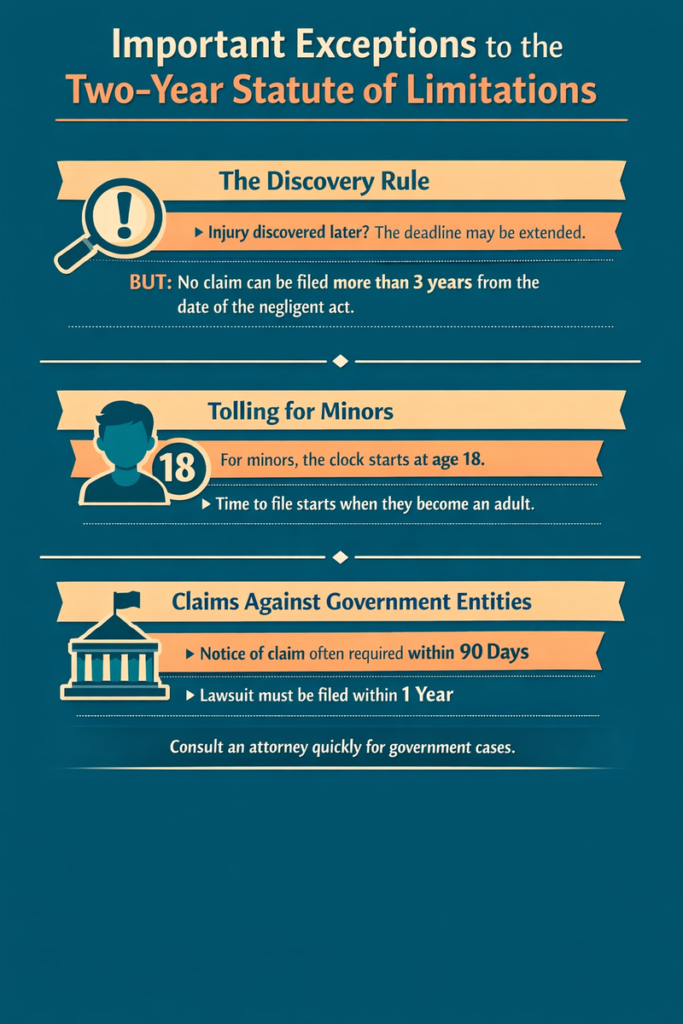
Important Exceptions to the Two-Year Rule
Connecticut law recognizes several situations where the standard two-year deadline may be extended or modified. Understanding these exceptions is crucial because they can significantly impact your ability to pursue compensation.
The Discovery Rule
Connecticut law recognizes that some injuries are not immediately apparent. In these situations, the discovery rule may extend the filing deadline. With this rule, the two-year statute of limitations begins when the injured person discovers, or reasonably should have discovered, their injury.
However, Connecticut also limits how long the discovery rule can extend the deadline. According to Connecticut General Statutes, no personal injury claim can be filed more than three years from the date of the negligent act or omission, even if the injury was discovered later. This means in cases where an injury manifests years after an incident, victims may have less than two years to file once they discover the harm.
Tolling for Minors
When the injured person is a minor, the statute of limitations typically doesn’t begin until they turn 18. This gives young victims the opportunity to pursue legal action when they are old enough to understand their rights and make informed decisions about their case.
Claims Against Government Entities
Injury claims against state or municipal government entities face significantly shorter deadlines. Victims must typically file a notice of claim within a much tighter timeframe, sometimes as short as 90 days, and the lawsuit must be filed within one year rather than two. These stricter requirements make it even more critical to consult with an attorney immediately after an accident involving a government entity.
What Happens If You Miss the Deadline?
Missing the statute of limitations typically results in the complete loss of your legal claim. Once the deadline passes, the defendant can file a motion to dismiss your case based on the expired statute of limitations. Courts will grant this motion except in very rare circumstances, meaning you lose your opportunity to recover compensation for medical bills, lost wages, pain and suffering, and other damages.
Insurance companies know about these deadlines and sometimes use delay tactics in settlement negotiations. They may stretch out discussions knowing that as the statute of limitations approaches, injured victims face increasing pressure to accept lowball settlement offers rather than risk losing everything.
Steps to Protect Your Rights After an Accident
Taking action quickly after an injury is the best way to protect your legal rights. Document everything related to your accident and injuries, including photographs of the accident scene, medical records, receipts for expenses, and contact information for witnesses. Seek medical attention immediately, even if your injuries seem minor at first, because prompt medical evaluation creates important documentation and ensures you receive proper care.
Most importantly, consult with our experienced personal injury attorneys as soon as possible. We can evaluate your case, determine which deadlines apply to your specific situation, and take the necessary steps to preserve your claim. Early legal representation also allows us to conduct a thorough investigation while evidence is still available and witnesses’ memories are fresh.
Schedule a Free Consultation With the Trusted Personal Injury Attorneys at Mandelbaum Barrett PC
At Mandelbaum Barrett PC, we understand that navigating Connecticut’s statute of limitations can feel overwhelming while you’re trying to recover from your injuries. Our legal team handles every aspect of your case, from investigating the accident and gathering evidence to negotiating with insurance companies and, when necessary, filing a lawsuit before the deadline expires. We work on a contingency fee basis, which means you pay nothing unless we recover compensation for you.
With decades of experience handling personal injury claims, our experienced attorneys include Certified Civil Trial Attorney Andrew Bronsnick and Co-Chair Joseph J. Peters. We provide personalized attention to every client and fight aggressively to maximize the compensation you deserve. Don’t wait until it’s too late to pursue the justice you deserve. Contact our office today for a free consultation to discuss your case and learn how we can help you navigate Connecticut’s complex legal deadlines.