
Every day, drivers across New Jersey pass through hundreds of intersections without a second thought, but these are among the most dangerous places on the road. If you were hurt in one of these crashes, understanding who is liable and what your options are can make a real difference in your recovery.
At Mandelbaum Barrett PC, our personal injury attorneys have decades of experience helping injured New Jersey drivers pursue the compensation they deserve. With Certified Civil Trial Attorney Andrew Bronsnick and Co-Chair Joseph J. Peters leading the practice, our team is equipped to handle even the most complex intersection accident claims throughout the state.
Common Causes of Intersection Accidents
Not all intersection crashes happen the same way, and identifying the cause is a critical part of building your case. The circumstances of a collision often point directly to which driver acted negligently and who should be held responsible.
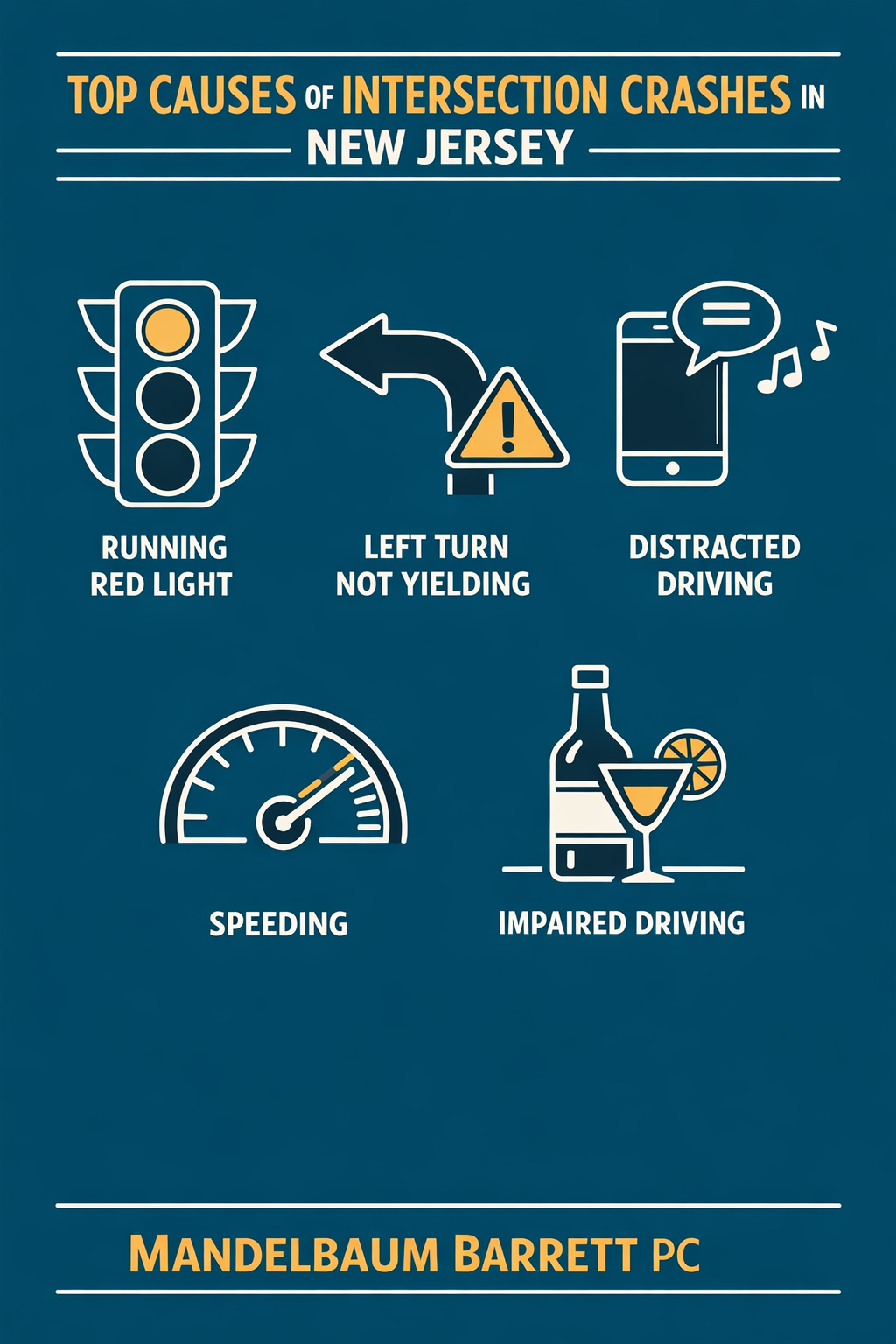
According to the National Highway Traffic Safety Administration, more than 21% of all fatal traffic crashes in 2022 occurred at intersections, making them a leading location for serious collisions. Some of the most frequent causes of car accidents at New Jersey intersections include the following:
- Running red lights or stop signs: Blowing through a traffic control device is one of the most dangerous things a driver can do, putting everyone in the intersection at immediate risk of a broadside or T-bone collision.
- Failure to yield on a left turn: Left-turn accidents are among the most common intersection crashes. A driver who misjudges the speed or distance of oncoming traffic can cause a violent head-on or side-impact collision.
- Distracted driving: A driver who glances at a phone, adjusts a radio, or looks away for even a moment may fail to notice a changing light or a vehicle already in the intersection.
- Speeding: Higher speeds reduce stopping distance and reaction time, making it far more difficult to avoid a crash when entering an intersection.
- Impaired driving: Impaired judgment and slowed response times are caused by alcohol and drugs, leading drivers to overlook traffic signals or severely misjudge road conditions.
Each of these behaviors creates a clear basis for a negligence claim, and the right evidence can make all the difference in proving what happened.
How Legal Liability Works in New Jersey Intersection Crashes
New Jersey follows a modified comparative negligence standard. This standard means fault can be shared between multiple parties. As long as you are found to be less than 51% responsible for the accident, you may still recover damages, though your award may be reduced proportionally. This is also the reason why establishing fault is critical.
Proving Who Had the Right of Way
Liability in an intersection accident typically comes down to who had the legal right-of-way and whether any traffic laws were violated. Police reports, traffic camera footage, eyewitness accounts, and accident reconstruction reports are all tools attorneys use to piece together the sequence of events. Acting quickly to preserve this evidence is important, as some of it can disappear within days of a crash.
When a Third Party May Also Be Liable
In some cases, parties beyond the drivers themselves may share responsibility. A municipality can be held liable if a malfunctioning traffic signal, missing signage, or poorly designed roadway contributed to the crash. Employers can also be liable when the at-fault driver was operating a vehicle for work purposes at the time of the collision. Identifying every potentially responsible party is a key step toward maximizing your recovery.
Injuries and Damages in Intersection Collisions
The type of crash that typically occurs at intersections, particularly T-bone and broadside collisions, is especially dangerous. Unlike rear-end accidents, side-impact crashes provide minimal structural protection for occupants, and the forces involved often cause severe harm. Victims frequently suffer from traumatic brain injuries, broken bones, spinal injuries, and other conditions that may qualify as catastrophic injuries under New Jersey law.
When pursuing a claim, injured victims may seek both economic and non-economic compensation. Economic and non-economic damages can include past and future medical expenses, lost income, long-term care costs, pain and suffering, permanent disability, and loss of enjoyment of life. New Jersey courts ask juries to consider the full impact of an injury on a person’s life, including impairment and the loss of activities that once brought meaning and joy.
Contact Mandelbaum Barrett PC After an Intersection Accident
When an intersection accident turns your life upside down, having the right legal team in your corner can change the outcome of your claim. With decades of experience handling personal injury claims, our experienced attorneys include Certified Civil Trial Attorney Andrew Bronsnick and Co-Chair Joseph J. Peters. Our team knows how to investigate crashes thoroughly, fight insurance companies, and pursue every dollar our clients are owed.You do not have to face this process alone. Fill out our contact form today, and a member of our team will be in touch to discuss your situation.