
When a loved one lives in a nursing home, you trust the staff to keep them safe. But abuse and neglect do happen, and knowing how to report it can make a real difference. New Jersey has clear laws that specify who must report suspected abuse, where to send those reports, and what happens after a report is made. Understanding these rules gives families the power to act quickly and protect their loved ones.
At Mandelbaum Barrett PC, we have been helping New Jersey families navigate complex legal matters for over 90 years. Our nursing home abuse attorneys understand how frightening it can be to suspect that someone you love is being harmed. We are here to help you understand your rights and take steps to stop the abuse.
Who Is Required to Report Nursing Home Abuse?
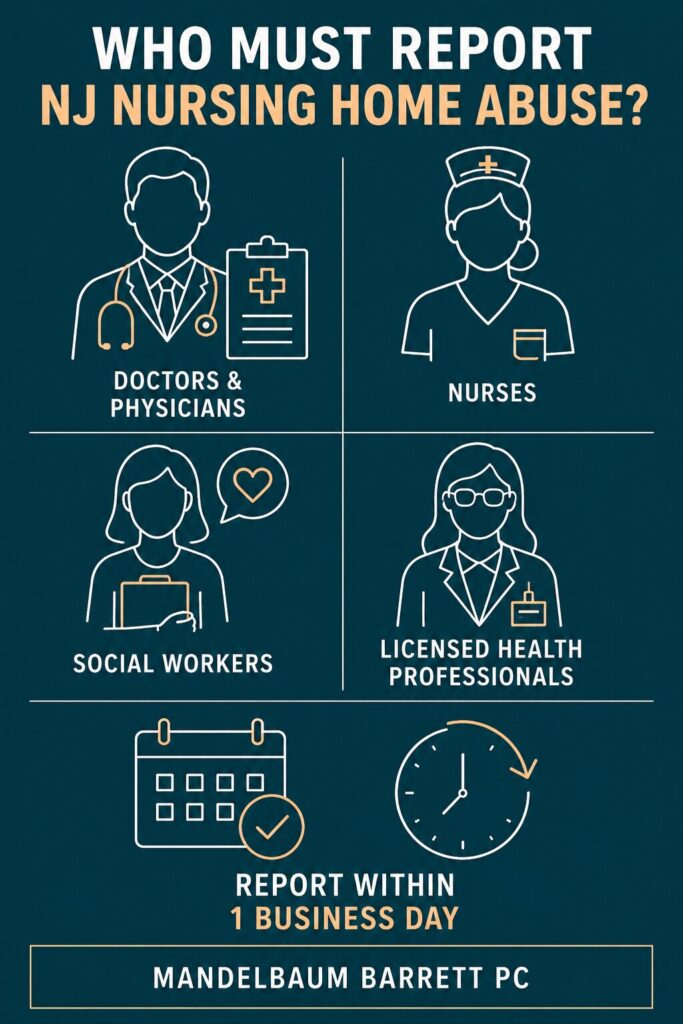
New Jersey law places a legal duty on certain people to report suspected abuse of nursing home residents. These individuals are called mandatory reporters. They include healthcare providers such as doctors, nurses, social workers, and other licensed professionals who work with elderly patients. If a mandatory reporter has a reasonable belief that abuse, neglect, or exploitation has occurred, they must report it to the appropriate agency within one business day.
Nursing home staff members are also considered mandatory reporters under state law. This means that anyone employed by a long-term care facility, from aides to administrators, is required by law to report what they see or suspect. Failure to report can lead to legal consequences for the individual and the facility.
What Counts as Abuse?
Nursing home abuse can take many forms. It is not limited to physical harm. New Jersey law defines abuse to include the following:
- Physical abuse, such as hitting, pushing, or rough handling
- Emotional abuse, including threats, humiliation, or isolation
- Sexual abuse or inappropriate contact
- Financial exploitation, such as stealing money or misusing a resident’s funds
- Neglect, which occurs when a facility fails to provide basic needs like food, medical care, or hygiene
It is important to note that injury does not have to occur for abuse to be legally recognized in New Jersey. Knowing the signs of nursing home neglect early can help families act before serious harm is done.
Where to Report Suspected Nursing Home Abuse in New Jersey
New Jersey provides several official channels for reporting nursing home abuse. The right agency depends on where the resident lives and the nature of the concern.
For residents in nursing homes or other long-term care facilities, the primary resource is the New Jersey Long-Term Care Ombudsman. This state office advocates for the rights of residents and investigates complaints of abuse, neglect, and exploitation. According to the New Jersey Long-Term Care Ombudsman, families and individuals can file a complaint by calling 1-877-582-6995, which is available around the clock. Reports can also be submitted by email or through an online complaint form on the office’s official website.
The New Jersey Department of Health also maintains a 24-hour complaint hotline at 1-800-792-9770 for issues involving nursing homes and other licensed care facilities. If there is an immediate emergency or risk of harm, calling 911 is always the right first step. Individuals who report in good faith are protected from legal liability under state law. Complaints can be made confidentially, and the names of those who report are not disclosed without their permission.
What Happens After a Report Is Made?
Once a report is filed, the appropriate agency must investigate. The New Jersey Long-Term Care Ombudsman’s office reviews complaints and works with residents and families to resolve issues. In cases involving possible criminal conduct, the matter may be referred to the county prosecutor. A nursing home found in violation of state or federal law may be required to submit a written plan of correction within 10 business days.
Families who believe their loved one has been harmed may also have the right to pursue a civil claim against the facility. New Jersey law gives victims two years from the date of injury to file a personal injury claim, and two years from the date of death in cases involving wrongful death.
Working with an attorney early is important because gathering evidence, such as medical records and witness accounts, takes time. In some situations, nursing home abuse leads to serious injuries that may fall under catastrophic injury claims or result in a wrongful death claim.
Contact Mandelbaum Barrett PC About Nursing Home Abuse in New Jersey
If you believe a family member has been abused or neglected in a New Jersey nursing home, do not wait to take action. Understanding your rights is the first step, but having an attorney in your corner can make the process much easier to handle. Our team has helped families recognize, prevent, and respond to elder abuse across the state. With decades of experience handling personal injury claims, our experienced attorneys include Certified Civil Trial Attorney Andrew Bronsnick and Co-Chair Joseph J. Peters.
We offer a free consultation so you can speak with us and learn what your options are. Whether your concern is about a current situation or you need guidance on how to proceed after filing a report, we are ready to help. Contact our team to take the first step toward protecting your loved one.
This content is for informational purposes only and does not constitute legal advice. Please consult with a qualified attorney regarding your specific situation.