
In New Jersey, rear-end collisions are among the most frequently occurring types of car crashes, and they often leave victims dealing with injuries, medical bills, and lost wages. If you were struck from behind, you may assume that fault is obvious, and while that is often true, building a strong legal case still requires evidence, documentation, and a clear understanding of how New Jersey law applies to your situation.
At Mandelbaum Barrett PC, our personal injury attorneys have decades of experience helping injured people throughout New Jersey take on insurance companies and pursue the full compensation they deserve. Whether you suffered whiplash, a herniated disc, or a more serious injury, we are here to guide you through every step of the process.
Why Fault Isn’t Always as Simple as It Seems
Rear-end collisions are frequently blamed on the following driver, and for good reason. Drivers are expected to maintain a safe following distance and remain attentive to traffic ahead. A safe following distance and attention to traffic are mandatory expectations for all drivers. When someone fails to do that and strikes another vehicle, negligence is generally presumed.
That said, fault can become more complicated depending on the circumstances. Insurance companies do not simply accept liability because a collision happened. They will look for any way to shift blame or minimize the payout, and that is exactly why understanding how fault is established matters.
What Creates a Presumption of Fault?
New Jersey courts generally presume that a driver who rear-ends another vehicle was negligent, based on the principle that a reasonably attentive driver should have enough time to stop. This presumption exists because common types of car collisions in New Jersey almost always involve some degree of driver error, and rear-end crashes are no exception.
When the Lead Driver May Share Responsibility
In some cases, the driver in front may bear partial fault. If that driver cut off another vehicle, reversed without warning, had non-functioning brake lights, or stopped suddenly in a dangerous location, insurers may argue comparative fault. Under New Jersey’s modified comparative negligence rule, you can still recover compensation as long as you are not more than 50% responsible. Still, your recovery will be reduced by your percentage of fault.
Building the Evidence to Prove Your Case
Strong evidence is what separates a well-supported claim from one that an insurance company can chip away at. Gathering the right documentation after a rear-end collision in New Jersey is critical to maximizing your recovery.
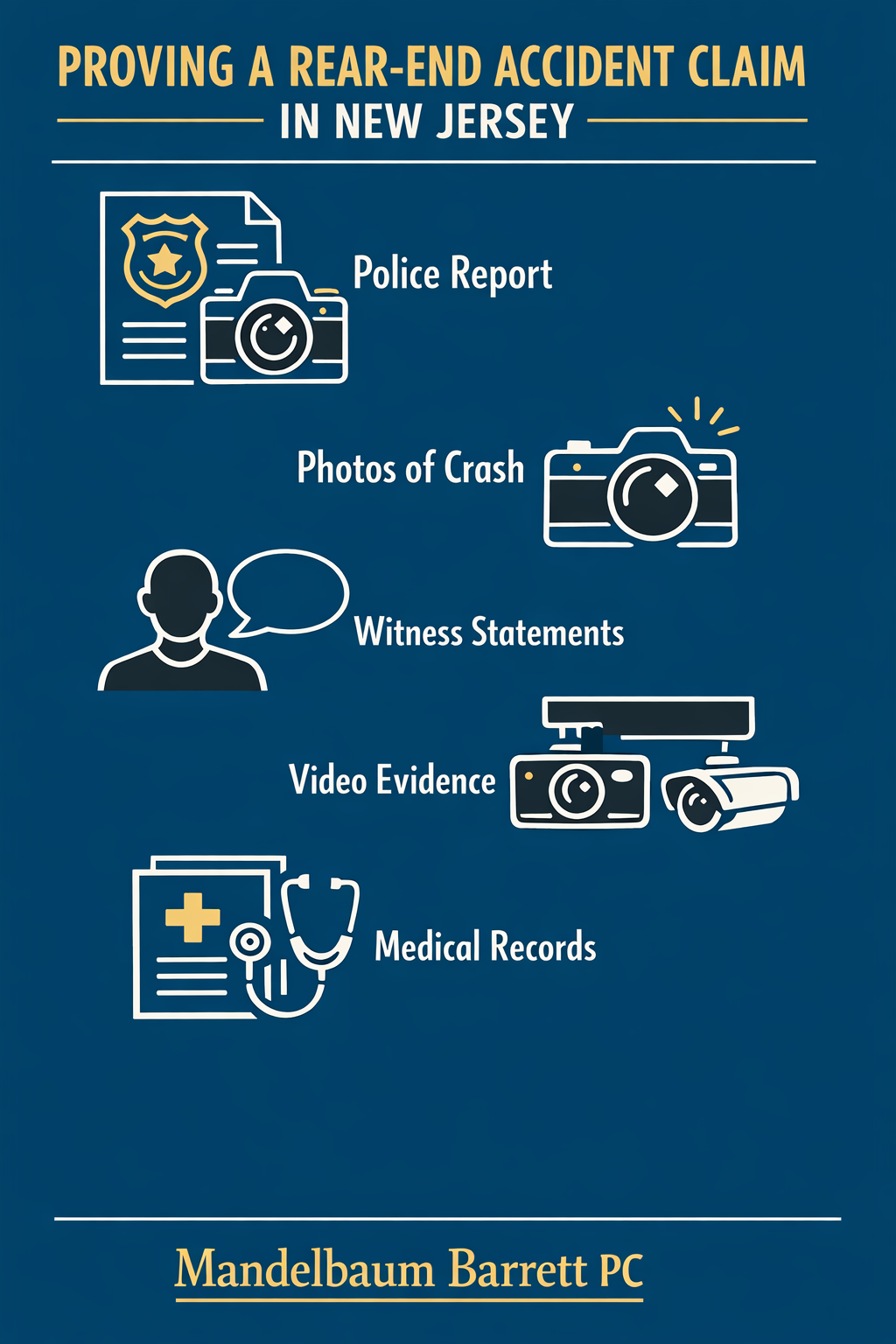
The most valuable forms of evidence include the following:
- Police report from the scene documenting the collision and any citations issued
- Photographs of vehicle damage, road conditions, skid marks, and visible injuries
- Witness statements from people who saw the collision happen
- Surveillance or dashcam footage capturing the moment of impact
- Medical records linking your injuries directly to the collision
Every piece of evidence tells part of the story, and together they build the foundation of your claim. According to the National Highway Traffic Safety Administration, rear-end collisions account for nearly a third of all traffic crashes in the United States, and documentation gathered at the scene plays a direct role in how those cases are resolved.
What You Can Recover After a Rear-End Collision
The injuries from a rear-end collision can range from soft tissue damage to traumatic brain injuries, and the compensation available to you should reflect the full extent of your losses. New Jersey law allows injured victims to seek both economic and non-economic damages, and understanding the difference between economic and non-economic damages is an important part of evaluating what your case is worth.
Economic damages cover the concrete financial losses you can calculate: medical expenses, future treatment costs, lost wages, and property damage. Non-economic damages address the losses that are harder to quantify, including pain and suffering, disability and impairment, and loss of enjoyment of life.
New Jersey’s verdict sheet framework for negligence cases specifically asks juries to assess the amount that will fairly compensate a plaintiff for pain and suffering, disability and impairment, and loss of enjoyment of life resulting from permanent injuries. Knowing how pain and suffering are calculated in personal injury claims can help you understand what to expect as your case moves forward.
Contact Mandelbaum Barrett PC After a Rear-End Collision
When you have been injured in a rear-end collision in New Jersey, you should not have to fight the insurance company on your own. These companies have legal teams focused on protecting their bottom line, and having an experienced attorney in your corner levels the playing field. With decades of experience handling personal injury claims, our attorneys include Certified Civil Trial Attorney Andrew Bronsnick and Co-Chair Joseph J. Peters.At Mandelbaum Barrett PC, we fight for injured people throughout New Jersey, taking on insurance companies like NJM, Geico, and State Farm to pursue fair outcomes for our clients. If you are ready to discuss your case, we encourage you to contact us online to schedule a free consultation.