
When you’ve been injured in an accident that wasn’t entirely your fault, understanding how Connecticut assigns blame can mean the difference between recovering compensation and walking away empty-handed. Connecticut’s modified comparative fault law determines not only whether you can recover damages but also how much you’ll ultimately receive, making it one of the most critical factors in any personal injury settlement.
At Mandelbaum Barrett PC, our personal injury attorneys understand the complexities of Connecticut’s comparative fault system and how insurance companies use it to reduce or deny claims. We know how to build strong cases that minimize your share of fault while maximizing your compensation.
Understanding Connecticut’s Modified Comparative Fault System
Connecticut uses a modified comparative fault system under Connecticut General Statutes § 52-572h, which allows injured parties to recover compensation even when they share some responsibility for their accident. This legal framework recognizes that accidents often involve multiple contributing factors and that fault is rarely absolute.
Under this system, your compensation is reduced by your percentage of fault, but only if you’re found to be 50% or less responsible for the accident. For example, if you suffered $100,000 in damages but are deemed 30% at fault, your recovery would be reduced by 30% to $70,000. However, if your fault reaches 51% or more, you’re barred from recovering any compensation. This threshold creates a critical line that can make or break your case, so having experienced legal representation to challenge fault allegations is essential.
How Insurance Companies Use Comparative Fault to Reduce Your Settlement
Insurance adjusters understand Connecticut’s comparative fault law and routinely use it to minimize payouts. Even when their insured driver is clearly responsible for a car accident, they’ll search for any reason to shift blame onto you. They might claim you were distracted, speeding, or failed to take evasive action, even when these allegations lack merit.
This strategy serves two purposes for insurance companies. First, any percentage of fault assigned to you directly reduces the amount they must pay. Second, if they can convince a jury that you were 51% or more at fault, they pay nothing at all. These tactics become especially aggressive in high-value cases involving serious injuries or truck accidents, where the potential payout is substantial, and insurance companies have more incentive to dispute liability.
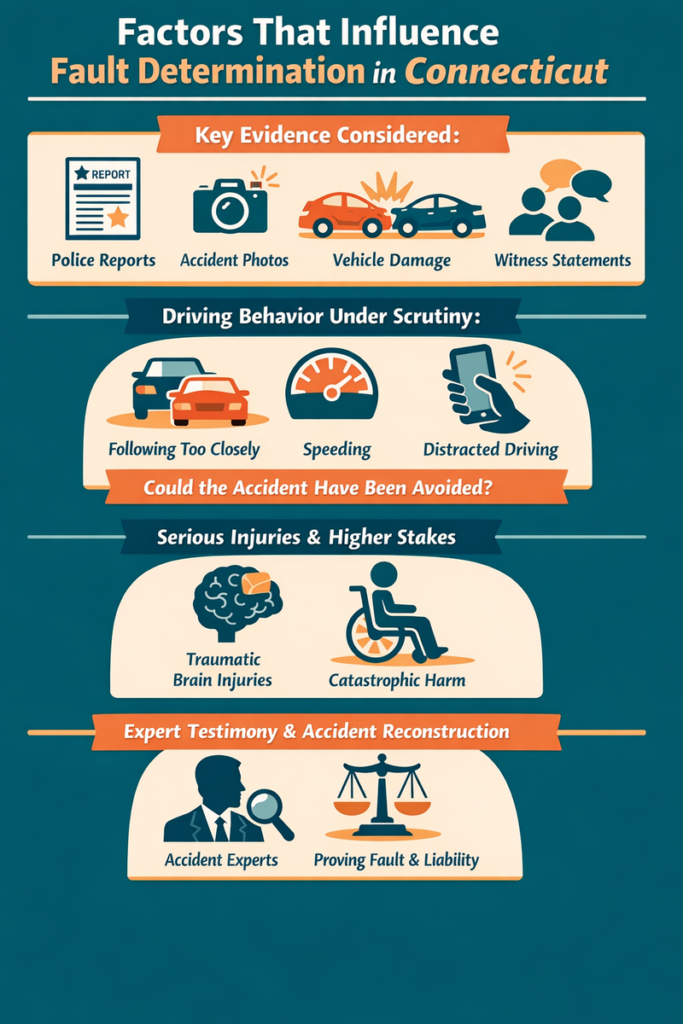
Factors That Influence Fault Determination in Connecticut
Courts and insurance adjusters consider numerous factors when determining each party’s share of fault in an accident. Physical evidence plays a crucial role, including police reports, accident scene photographs, vehicle damage patterns, and witness statements. Traffic violations matter significantly, as breaking a traffic law at the time of the accident can substantially increase your assigned fault percentage.
Your actions immediately before and during the accident come under scrutiny. Were you following too closely, speeding, or using your phone? Did you have an opportunity to avoid the collision? In cases involving traumatic brain injuries or other catastrophic harm, these questions become even more important because the stakes are higher. Expert testimony from accident reconstruction specialists can prove invaluable in proving your actions were reasonable given the circumstances, and the other party bears primary responsibility.
How to Protect Your Rights Under Connecticut’s Comparative Fault Law
The best defense against unfair fault allocation begins the moment your accident occurs. Document everything you can at the scene with photographs and videos of vehicle positions, road conditions, traffic signals, and visible injuries. Get contact information from witnesses who saw what happened. Seek immediate medical attention, as gaps in treatment give insurance companies ammunition to argue that you weren’t truly injured or that you contributed to the severity of your injuries by delaying care.
Never admit fault or apologize at the accident scene, even casually, as these statements can be used against you later. Insurance adjusters may contact you quickly after an accident, hoping to obtain a recorded statement before you’ve consulted an attorney. These conversations are designed to elicit admissions that can increase your fault percentage. Having legal representation early ensures that someone protects your interests from the start, gathering evidence that minimizes your liability while establishing the other party’s negligence.
Fight Back Against Unfair Fault Allegations With Mandelbaum Barrett PC
Connecticut’s modified comparative fault law significantly impacts every personal injury settlement, making it essential to have attorneys who understand how to navigate this system effectively. Our legal team at Mandelbaum Barrett PC works diligently to thoroughly investigate your accident, challenge unfair fault allegations, and present compelling evidence establishing the other party’s primary responsibility.
With decades of experience handling personal injury claims, our experienced attorneys include Certified Civil Trial Attorney Andrew Bronsnick and Co-Chair Joseph J. Peters. Whether you’re facing allegations of shared fault or simply want to ensure your rights are protected throughout the claims process, we’re here to help you pursue the maximum compensation available under Connecticut law. Don’t let insurance companies use comparative fault as a weapon against you. Contact our office today to schedule a free consultation.