
A dog bite can turn an ordinary day into a life-changing event, leaving victims with serious injuries, emotional trauma, and costly medical bills. In New Jersey, property owners who keep dogs face real legal responsibility when their animals hurt someone, and understanding that responsibility is the first step toward knowing your rights.
At Mandelbaum Barrett PC, our team has spent decades handling personal injury claims for clients who were injured through the negligence of others. We know how overwhelming it can feel after a dog attack, and we are here to help you navigate what the law says and what your next steps should be.
New Jersey’s Dog Bite Law Explained
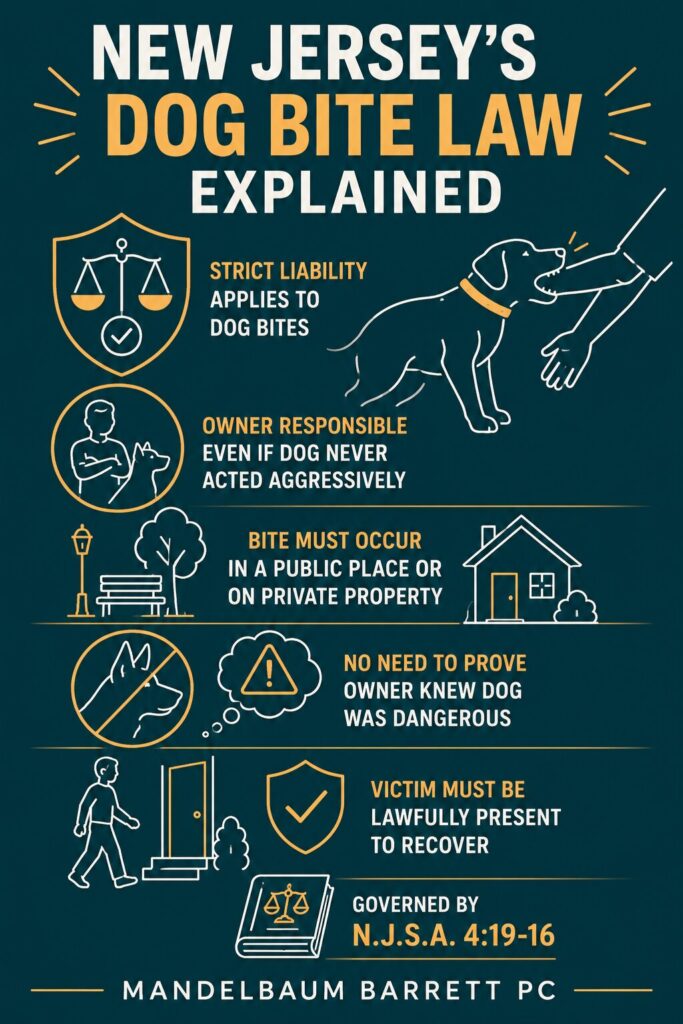
New Jersey follows strict liability when it comes to dog bites, which means property owners are held responsible even if their dog has never acted aggressively before. Under N.J.S.A. 4:19-16, a dog owner is liable for a bite that happens in a public place or on private property, as long as the victim was lawfully present. This removes the need to prove the owner knew their dog was dangerous.
To win a dog bite claim in New Jersey, a victim generally needs to show three things: that the person being sued owned the dog, that the dog bit the victim, and that the victim was in a public place or lawfully on the owner’s property at the time.
Who Counts as “Lawfully Present”?
The phrase “lawfully present” matters a great deal in dog bite cases. A person is considered lawfully on private property if they were invited by the owner, whether that invitation was direct or implied. For example, a guest at a party, a delivery driver, or a mail carrier are all considered lawfully present. People performing duties required by state or federal law are also covered.
On the other hand, a person who was trespassing when the bite happened may not be able to bring a claim under the strict liability statute. That said, trespassers may still have options under general negligence law depending on the facts of their case.
Property Owners and Landlord Liability
It is important to note that strict liability applies to dog owners, not necessarily to landlords. A landlord who does not own the dog cannot be held strictly liable simply because the dog lives on their property. However, a landlord can still face liability if they knew or should have known that a tenant’s dog was dangerous and failed to act.
This is relevant in apartment buildings, rental homes, and other multi-unit housing. If a landlord received complaints about a dog’s aggressive behavior and took no action, they could be named in a premises liability case alongside the dog’s owner.
What Damages Can a Victim Recover?
Dog bite injuries can be serious and far-reaching. According to the American Veterinary Medical Association, more than 4.5 million people are bitten by dogs each year in the United States, and many of those bites lead to significant physical and financial harm. Victims in New Jersey may be entitled to recover a range of losses after a dog attack.
There are several categories of compensation a victim may pursue, and knowing them helps show why these cases matter:
- Medical expenses: Costs for emergency care, surgeries, stitches, rabies treatment, and follow-up visits
- Lost wages: Income lost during recovery from the attack
- Pain and suffering: Physical pain and emotional distress tied to the incident
- Scarring and disfigurement: Compensation for permanent physical changes caused by the bite
- Psychological harm: Ongoing anxiety, fear, or trauma that affects everyday life
Understanding the difference between economic and non-economic damages can help victims appreciate the full value of what they may be owed. A skilled legal team will work to pursue every type of loss that applies.
Defenses That Property Owners May Raise
Even under strict liability, dog owners do have some defenses available to them. Provocation is the most common. If the victim teased, taunted, or deliberately provoked the dog, the owner may use that as a defense to reduce or eliminate liability. The burden of proving provocation falls on the defendant, not the victim.
Comparative negligence may also come into play. New Jersey follows a modified comparative negligence rule, which means that if the victim is found partially at fault, their recovery can be reduced. If they are found more than 50% at fault, they may not recover at all. These questions of shared fault often arise in cases involving other property hazards, such as slips, trips, and falls on a property.
Contact Mandelbaum Barrett PC About Your Dog Bite Case
With decades of experience handling personal injury claims, our experienced attorneys include Certified Civil Trial Attorney Andrew Bronsnick and Co-Chair Joseph J. Peters. Our team knows how to investigate dog bite incidents, build strong cases, and pursue the full compensation our clients deserve.
If you have been hurt by a dog on someone else’s property, do not wait to seek legal guidance. Contact us today to schedule a free consultation and find out how we can help you move forward.
This content is for informational purposes only and does not constitute legal advice. Please consult with a qualified attorney regarding your specific situation.